Learning art in different languages is a fascinating way to expand your vocabulary while exploring the creativity and cultural heritage of people around the world. Whether you’re an artist, student, traveler or language learner, knowing how to say art in different languages helps you communicate more naturally in museums, galleries, classrooms and creative communities.
In this guide, you’ll discover art in different languages with native spellings and easy English pronunciations. You’ll also learn why this word is important, when to use it, and interesting facts about how art is valued across different cultures.
Quick Answer
Art in different languages includes the translations used worldwide to describe creative expression through painting, sculpture, music, dance, literature, and other visual and performing arts. Learning these words improves your vocabulary, cultural awareness, and communication skills.
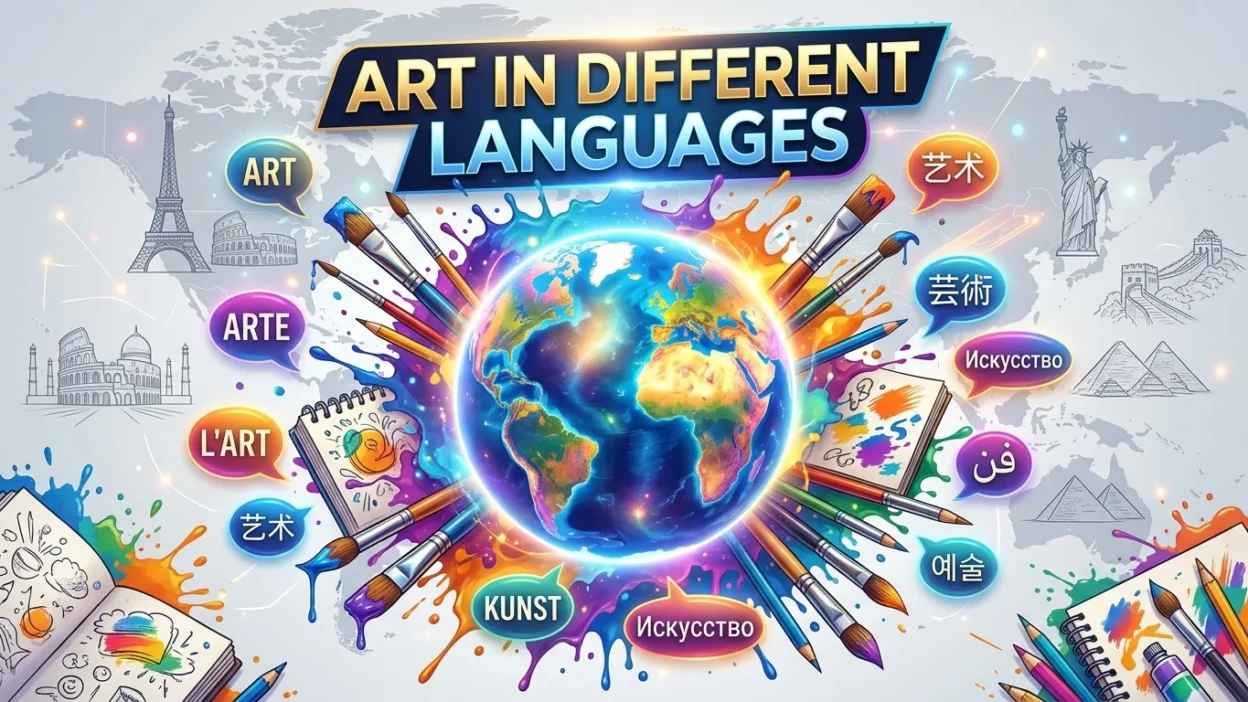
Art in Different Languages Around the World
| Language | Native Word | Pronunciation |
|---|---|---|
| English | Art | Art |
| Spanish | Arte | AR-te |
| French | Art | Ar |
| German | Kunst | Koonst |
| Italian | Arte | AR-te |
| Portuguese | Arte | AR-chee |
| Dutch | Kunst | Koonst |
| Swedish | Konst | Konst |
| Norwegian | Kunst | Koonst |
| Danish | Kunst | Koonst |
| Finnish | Taide | TAI-deh |
| Icelandic | List | List |
| Polish | Sztuka | SHTOO-ka |
| Czech | Umění | OO-meh-nyee |
| Slovak | Umenie | OO-meh-nye |
| Hungarian | Művészet | Mew-vay-set |
| Romanian | Artă | AR-tuh |
| Greek | Τέχνη | TEKH-ni |
| Russian | Искусство | Is-KOOS-stvo |
| Ukrainian | Мистецтво | Mys-TET-stvo |
| Bulgarian | Изкуство | Iz-KOOS-tvo |
| Serbian | Уметност | U-met-nost |
| Croatian | Umjetnost | Oo-myet-nost |
| Turkish | Sanat | Sa-nat |
| Arabic | فن | Fann |
| Hebrew | אמנות | O-ma-noot |
| Persian | هنر | Honar |
| Hindi | कला | Kala |
| Urdu | فن | Fun |
| Punjabi | ਕਲਾ | Kala |
| Bengali | শিল্প | Shilpo |
| Gujarati | કલા | Kala |
| Marathi | कला | Kala |
| Tamil | கலை | Kalai |
| Telugu | కళ | Kala |
| Kannada | ಕಲೆ | Kale |
| Malayalam | കല | Kala |
| Nepali | कला | Kala |
| Sinhala | කලාව | Kalawa |
| Thai | ศิลปะ | Sin-la-pa |
| Vietnamese | Nghệ thuật | Nghe Thuat |
| Indonesian | Seni | Seh-nee |
| Malay | Seni | Seh-nee |
| Filipino | Sining | Si-ning |
| Chinese (Mandarin) | 艺术 | Yi Shu |
| Japanese | 芸術 | Gei-jutsu |
| Korean | 예술 | Ye-sul |
| Swahili | Sanaa | Sa-naa |
| Hawaiian | Noʻeau | No-eh-ow |
| Māori | Toi | Toy |
Why Learn “Art” in Different Languages?
Learning art in different languages helps you communicate in creative and educational settings while expanding your cultural understanding. Whether you’re visiting museums, attending exhibitions, studying art history, or discussing paintings, sculptures, music, or dance, knowing the local word for art makes conversations easier and more meaningful.
Art is a universal form of expression that exists in every culture. Understanding how different languages describe art also provides insight into the traditions, values, and creative heritage of societies around the world.
Common Uses of “Art” Around the World
The word art is used in many aspects of daily life, including education, museums, galleries, cultural events, and creative professions. People use it when discussing paintings, sculptures, photography, architecture, music, dance, theater, literature, and digital design. Whether you’re visiting an art exhibition, taking an art class, or reading about famous artists, knowing how to say art in different languages makes communication easier and more enjoyable.
Art also plays an important role in preserving history and culture. Every country has unique artistic traditions that reflect its beliefs, customs, and heritage. From ancient cave paintings to modern digital illustrations, art continues to inspire creativity and connect people across cultures. Learning this vocabulary helps language learners better understand conversations related to creativity and culture.
Pronunciation Tips for Beginners
Learning the pronunciation of art in different languages is easier when you practice a few translations every day. Listen to native speakers through language-learning apps, online dictionaries, or educational videos, then repeat each word several times. Focus on pronunciation, rhythm, and stress rather than trying to speak quickly. Consistent practice helps improve both your speaking skills and confidence.
Grouping languages with similar pronunciation patterns is another effective strategy. For example, Spanish, Italian, and Portuguese use very similar words for art, while German, Dutch, and Scandinavian languages share related pronunciation. Flashcards, audio recordings, and daily vocabulary exercises are excellent ways to remember these translations.
Interesting Facts About Art Around the World
Art has been part of human civilization for tens of thousands of years. Some of the oldest known artworks are prehistoric cave paintings created more than 40,000 years ago. Today, every culture has its own distinctive artistic styles, ranging from traditional folk art and calligraphy to contemporary paintings, sculptures, and digital creations.
Another interesting fact is that many of the world’s most famous museums attract millions of visitors every year. Art is also recognized as a universal language because it communicates emotions, ideas, and stories without relying on spoken words. Whether through music, dance, painting, or sculpture, art has the power to bring people from different backgrounds together and inspire creativity across generations.
Conclusion
Learning art in different languages is a valuable way to expand your vocabulary while appreciating the rich cultural diversity of the world. Whether you’re studying a foreign language, visiting museums, traveling internationally or exploring creative fields, knowing how to say art in different languages helps you communicate more confidently. These translations also deepen your understanding of global traditions and remind us that creativity is a shared human experience that connects people across every culture.
Frequently Asked Questions
1. Why should I learn art in different languages?
Learning the word art helps you communicate in museums, galleries, schools, and creative communities while improving your vocabulary and cultural awareness.
2. Which languages have the most commonly recognized word for art?
Some of the most recognized translations include Arte (Spanish, Italian, and Portuguese), Kunst (German and Dutch), 艺术 (Yìshù) (Chinese), 芸術 (Geijutsu) (Japanese), and 예술 (Yesul) (Korean).
3. Can I use these translations while traveling?
Yes. Knowing the local word for art is useful when visiting museums, galleries, cultural festivals, historical sites, and tourist attractions around the world.
4. Is the word “art” the same in every language?
No. While some languages use similar words derived from Latin, others have completely different terms that reflect their own linguistic history and culture.
5. What is the easiest way to remember these translations?
Practice a few words each day, listen to native pronunciation, group similar languages together, and use flashcards or language learning apps. Regular review helps improve both memory and pronunciation.