
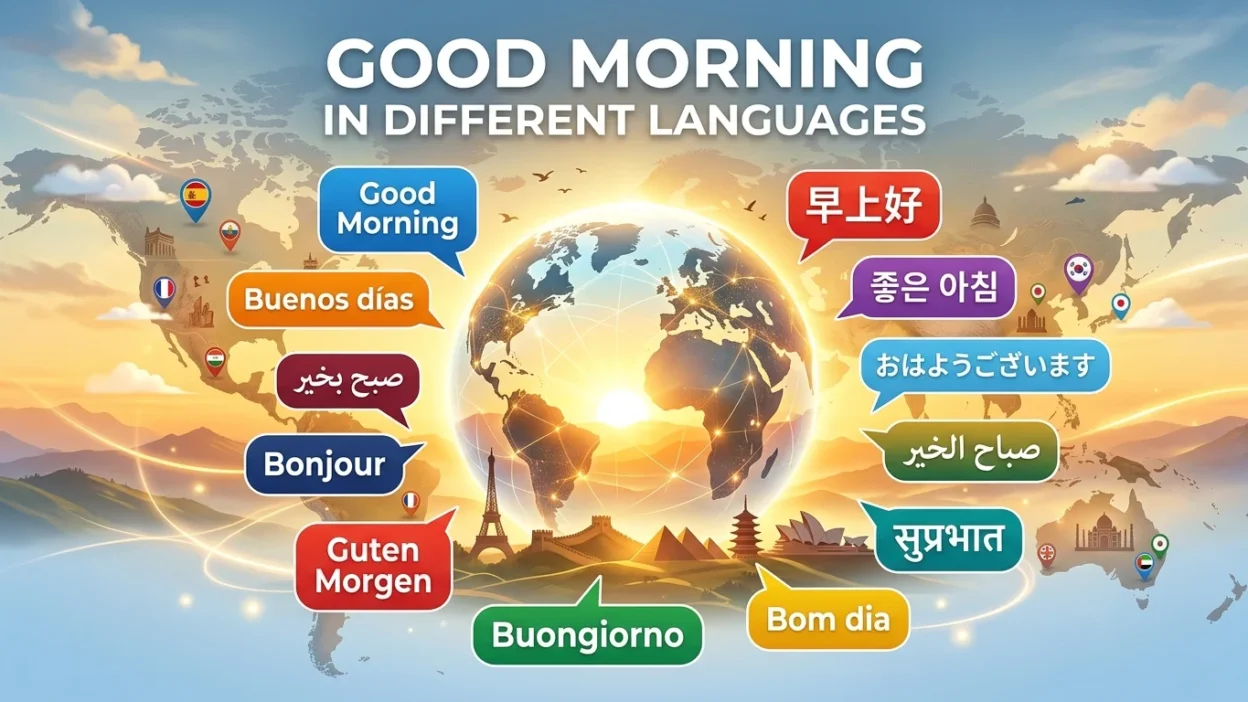
Learning good morning in different languages is a great way to connect with people from different cultures. Whether you’re traveling, studying a foreign language or communicating with international friends, greeting someone in their native language creates a positive first impression and shows genuine respect.
In this guide, you’ll discover good morning in different languages with native spellings and simple English pronunciations. You’ll also learn why morning greetings are important, where to use them and practical tips for remembering these common expressions from around the world.
Quick Answer
Good morning in different languages is a collection of greetings used worldwide to wish someone a pleasant start to the day. Learning these phrases improves communication, builds cultural awareness and helps you greet people confidently wherever you go.
Good Morning in Different Languages Around the World
| Language | Native Word | Pronunciation |
|---|---|---|
| English | Good morning | Good Mor-ning |
| Spanish | Buenos días | BWAY nos DEE as |
| French | Bonjour | Bon ZHOOR |
| German | Guten Morgen | GOO ten MOR gen |
| Italian | Buongiorno | Bwon JOR no |
| Portuguese | Bom dia | Bohm DEE ah |
| Dutch | Goedemorgen | HOO duh MOR ghen |
| Swedish | God morgon | Goo MOR gon |
| Norwegian | God morgen | Goo MOR gen |
| Danish | Godmorgen | Goo MOR-gen |
| Finnish | Hyvää huomenta | HUU vaa HWO men ta |
| Icelandic | Góðan daginn | GO than DA gin |
| Polish | Dzień dobry | Jen DOB ri |
| Czech | Dobré ráno | DO breh RAA no |
| Slovak | Dobré ráno | DO-breh RAA-no |
| Hungarian | Jó reggelt | Yoh REG-gelt |
| Romanian | Bună dimineața | BOO-nuh Dee-mee-NYA-tsa |
| Greek | Καλημέρα | Ka-lee-ME-ra |
| Russian | Доброе утро | DOB-ra-ye OO-tra |
| Ukrainian | Доброго ранку | DOB-ro-ho RAN-koo |
| Bulgarian | Добро утро | DOB-ro OO-tro |
| Serbian | Dobro jutro | DOB-ro YOO-tro |
| Croatian | Dobro jutro | DOB-ro YOO-tro |
| Turkish | Günaydın | Goo-NIGH-dun |
| Arabic | صباح الخير | Sa-bah al-Khair |
| Hebrew | בוקר טוב | BO-ker Tov |
| Persian | صبح بخیر | Sobh Be-kheyr |
| Hindi | सुप्रभात | Su-pra-bhaat |
| Urdu | صبح بخیر | Subah Bakhair |
| Punjabi | ਸਤਿ ਸ੍ਰੀ ਅਕਾਲ | Sat Sri Akaal |
| Bengali | সুপ্রভাত | Shu-pro-bhat |
| Gujarati | સુપ્રભાત | Su-pra-bhat |
| Marathi | सुप्रभात | Su-pra-bhaat |
| Tamil | காலை வணக்கம் | Kaalai Vanakkam |
| Telugu | శుభోదయం | Shu-bho-da-yam |
| Kannada | ಶುಭೋದಯ | Shu-bho-da-ya |
| Malayalam | സുപ്രഭാതം | Su-pra-bhaa-tham |
| Nepali | शुभ प्रभात | Shubha Prabhat |
| Sinhala | සුභ උදෑසනක් | Suba Udaesanak |
| Thai | สวัสดีตอนเช้า | Sa-wat-dee Ton Chao |
| Vietnamese | Chào buổi sáng | Chow Boo-ee Sang |
| Indonesian | Selamat pagi | Se-la-mat PA-gee |
| Malay | Selamat pagi | Se-la-mat PA-gee |
| Filipino | Magandang umaga | Ma-gan-dang Oo-ma-ga |
| Chinese (Mandarin) | 早上好 | Zǎo Shàng Hǎo |
| Japanese | おはようございます | O-ha-yo Go-zai-mas |
| Korean | 좋은 아침 | Jo-eun A-chim |
| Swahili | Habari za asubuhi | Ha-ba-ri Za A-su-boo-hi |
| Hawaiian | Aloha kakahiaka | A-lo-ha Ka-ka-hee-a-ka |
| Māori | Ata mārie | A-ta Maa-ree-eh |
Why Learn “Good Morning” in Different Languages?
Learning good morning in different languages is useful for travelers, students, professionals and anyone interested in languages. Greeting people in their native language shows politeness, respect and an interest in their culture. Even a simple greeting can make conversations feel warmer and more welcoming.
Morning greetings are often the first phrases language learners memorize because they are practical and used every day. Whether you’re visiting another country, joining an international meeting, or making new friends online, these expressions help you build confidence and start conversations naturally.
Common Uses of “Good Morning” Around the World
People use morning greetings in homes, schools, offices, hotels, restaurants, and public places. In many cultures, saying good morning is considered good manners and helps create a positive atmosphere before beginning the day’s activities.
Some languages have formal and informal versions, while others use the same greeting for everyone. Understanding local customs allows you to communicate more naturally and avoid awkward situations. A friendly greeting is often the first step toward building meaningful personal and professional relationships.
Tips for Learning and Pronouncing Morning Greetings
The easiest way to learn these greetings is by practicing a few each day. Listen to native speakers, repeat the phrases aloud, and focus on pronunciation instead of translating every word. Regular practice improves both your memory and speaking confidence.
Flashcards, language apps, and watching short videos are excellent learning methods. Associating each greeting with its country also makes it easier to remember. Don’t worry about being perfect—most native speakers appreciate the effort.
Interesting Facts About Morning Greetings
Many greetings have meanings beyond simply wishing someone a good morning. For example, the French word Bonjour literally means “good day” and is commonly used until the afternoon. Likewise, some Asian languages change greetings depending on the time of day and the level of formality.
Morning greetings are among the oldest forms of everyday communication. Across cultures, they symbolize kindness, respect, and a positive start to the day. Learning them is one of the easiest ways to understand the traditions and values of different societies.
Conclusion
Learning good morning in different languages is a practical skill that makes communication more enjoyable and culturally respectful. Whether you’re traveling, studying, or meeting people from around the world, these greetings help you create positive first impressions. By practicing a few phrases regularly, you’ll gain confidence, expand your language skills, and develop a deeper appreciation for global cultures.
Frequently Asked Questions
1. Why should I learn good morning in different languages?
Learning morning greetings helps you communicate politely, respect different cultures, and make positive first impressions. These phrases are also an excellent starting point for learning any new language.
2. Which languages have the most common morning greetings?
English, Spanish, French, German, Italian, Portuguese, Japanese, Chinese, Arabic, and Hindi are among the most widely spoken languages with commonly recognized morning greetings.
3. Is pronunciation important when greeting someone?
Yes. Clear pronunciation helps native speakers understand you more easily and shows respect for their language. Regular listening and practice will improve your confidence over time.
4. Can I use these greetings while traveling?
Absolutely. Using local greetings in hotels, restaurants, shops, and tourist attractions creates friendlier interactions and demonstrates appreciation for the local culture.
5. What is the easiest way to remember greetings in different languages?
Practice a few greetings every day, use flashcards, watch native speakers, and repeat the words aloud. Daily repetition makes remembering them much easier.