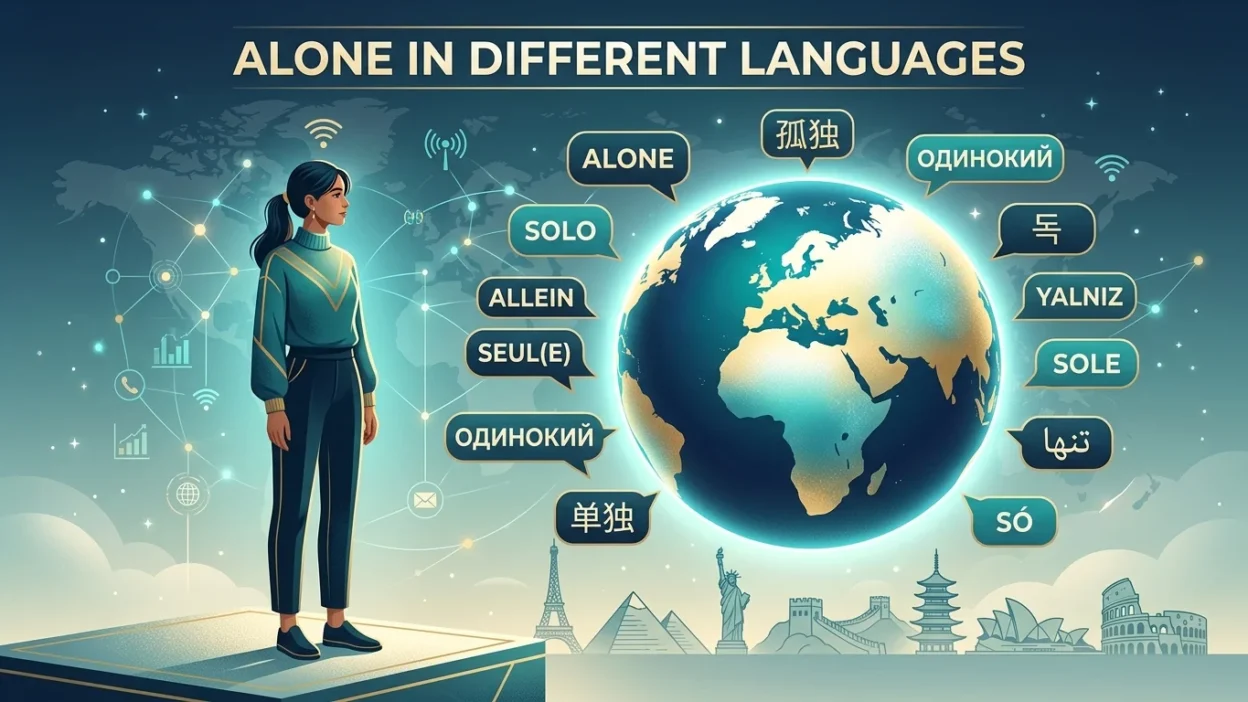
Learning alone in different languages is helpful for travelers, language learners, writers and anyone interested in expressing emotions across cultures. The word “alone” can describe being physically by yourself, enjoying solitude or feeling lonely depending on the context. Understanding its translations helps you communicate more naturally in everyday conversations.
In this guide, you’ll discover alone in different languages with native spellings and easy English pronunciations. You’ll also learn the different meanings of the word, when to use it, and practical tips for understanding how various cultures express the idea of being alone.
Quick Answer
Alone in different languages includes translations used around the world to describe being by yourself or without company. Learning these words improves your vocabulary, cultural understanding, and everyday communication in many languages.
Alone in Different Languages Around the World
| Language | Native Word | Pronunciation |
|---|---|---|
| English | Alone | Uh-Lone |
| Spanish | Solo / Sola | SO-lo / SO-la |
| French | Seul / Seule | Sul / Sul |
| German | Allein | Ah-LINE |
| Italian | Solo / Sola | SO-lo / SO-la |
| Portuguese | Sozinho / Sozinha | So-ZEEN-yo / So-ZEEN-ya |
| Dutch | Alleen | Ah-LANE |
| Swedish | Ensam | EN-sam |
| Norwegian | Alene | Ah-LE-ne |
| Danish | Alene | Ah-LE-ne |
| Finnish | Yksin | UUK-sin |
| Icelandic | Einn | Ayn |
| Polish | Sam / Sama | Sam / SA-ma |
| Czech | Sám / Sama | Saam / SA-ma |
| Slovak | Sám / Sama | Saam / SA-ma |
| Hungarian | Egyedül | Edj-eh-DOOL |
| Romanian | Singur / Singură | Seen-GOOR |
| Greek | Μόνος / Μόνη | MO-nos / MO-ni |
| Russian | Один | A-DEEN |
| Ukrainian | Один | O-DYN |
| Bulgarian | Сам | Sam |
| Serbian | Сам | Sam |
| Croatian | Sam | Sam |
| Turkish | Yalnız | Yal-nuz |
| Arabic | وحيد | Wa-heed |
| Hebrew | לבד | Le-vad |
| Persian | تنها | Tan-ha |
| Hindi | अकेला | A-ke-la |
| Urdu | اکیلا | A-ke-la |
| Punjabi | ਇਕੱਲਾ | Ik-kal-la |
| Bengali | একা | E-ka |
| Gujarati | એકલો | Ek-lo |
| Marathi | एकटा | Ek-ta |
| Tamil | தனியாக | Tha-ni-yaa-ga |
| Telugu | ఒంటరిగా | On-ta-ri-ga |
| Kannada | ಒಬ್ಬಂಟಿ | Ob-ban-ti |
| Malayalam | ഒറ്റയ്ക്ക് | Otta-kku |
| Nepali | एक्लै | Ek-lai |
| Sinhala | තනිව | Tha-ni-va |
| Thai | คนเดียว | Khon Diao |
| Vietnamese | Một mình | Mot Minh |
| Indonesian | Sendiri | Sen-dee-ree |
| Malay | Bersendirian | Ber-sen-dee-ree-an |
| Filipino | Mag-isa | Mag Ee-sa |
| Chinese (Mandarin) | 独自 | Du Zi |
| Japanese | 一人で | Hitori De |
| Korean | 혼자 | Hon-ja |
| Swahili | Peke yangu | Pe-ke Yan-gu |
| Hawaiian | Hoʻokahi | Ho-o-ka-hee |
| Māori | Mokemoke | Mo-ke-mo-ke |
Why Learn “Alone” in Different Languages?
Learning alone in different languages expands your vocabulary and helps you express different emotions more accurately. Depending on the situation, the word “alone” may simply mean being by yourself, enjoying solitude, or feeling isolated. Understanding these meanings allows you to communicate more naturally and avoid misunderstandings.
This word is commonly used in daily conversations, books, movies, songs, and travel situations. Whether you’re describing your plans, talking about your feelings, or learning a new language, knowing the correct translation makes communication easier and more meaningful.
Common Uses of “Alone” Around the World
The word “alone” is used in many everyday situations to describe being by yourself without other people. For example, someone might say they are traveling alone, eating alone, living alone, or working alone. In these cases, the word simply refers to being physically by yourself and does not necessarily imply sadness or loneliness. Many people enjoy spending time alone to relax, focus on work, or reflect on their thoughts.
In some situations, however, “alone” can express emotional feelings such as isolation or loneliness. The exact meaning depends on the context and the language being used. Some languages even have separate words for being alone by choice and feeling lonely, making it important to understand the cultural and emotional differences behind these expressions.
Pronunciation Tips for Beginners
Learning the pronunciation of alone in different languages is easier when you practice a few words at a time. Listen to native speakers through language-learning apps, online dictionaries, or educational videos, then repeat each translation aloud. Focus on pronunciation, rhythm, and word stress instead of trying to memorize every language at once. Daily repetition helps improve both confidence and accuracy.
You can also group languages by region to make learning more manageable. For example, Spanish, Italian, Portuguese, and French share similar pronunciation patterns, while Hindi, Urdu, and Punjabi have several related sounds. Flashcards, pronunciation guides, and speaking with native speakers are excellent ways to remember these translations naturally.
Interesting Facts About the Word “Alone”
Many languages distinguish between being alone and feeling lonely by using completely different words. English often relies on context to separate these meanings, but several other languages have unique vocabulary for each emotion. This reflects how cultures view solitude, independence, and social relationships differently.
Another interesting fact is that some cultures see spending time alone as a positive experience that encourages relaxation, creativity, and self-reflection. Others place greater importance on family and community, where being alone for long periods is less common. Learning these cultural perspectives helps you understand how languages express emotions beyond simple word-for-word translations.
Conclusion
Learning alone in different languages is a valuable way to expand your vocabulary and better understand how different cultures express solitude and personal feelings. Whether you’re traveling, learning a new language, reading international literature or communicating with friends around the world, knowing these translations helps you speak more naturally and confidently. Practice a few words each day, and you’ll quickly become more comfortable using them in real life conversations.
Frequently Asked Questions
1. Why should I learn alone in different languages?
Learning this word helps you describe situations where you’re by yourself, improve your language skills, and understand how different cultures express solitude and emotions.
2. Does “alone” always mean feeling lonely?
No. In many languages, “alone” simply means being by yourself. Feeling emotionally isolated is often expressed with a different word or phrase.
3. Can I use these translations while traveling?
Yes. These words are useful when describing travel plans, accommodations, dining alone, or explaining that you are by yourself in everyday conversations.
4. Which languages have separate words for alone and lonely?
Many languages, including English, Spanish, French, German, and Japanese, distinguish between physical solitude and emotional loneliness through different words or expressions.
5. What is the easiest way to remember these translations?
Practice a few languages every day, repeat the words aloud, group similar languages together and listen to native pronunciation. Regular review helps you remember them naturally.