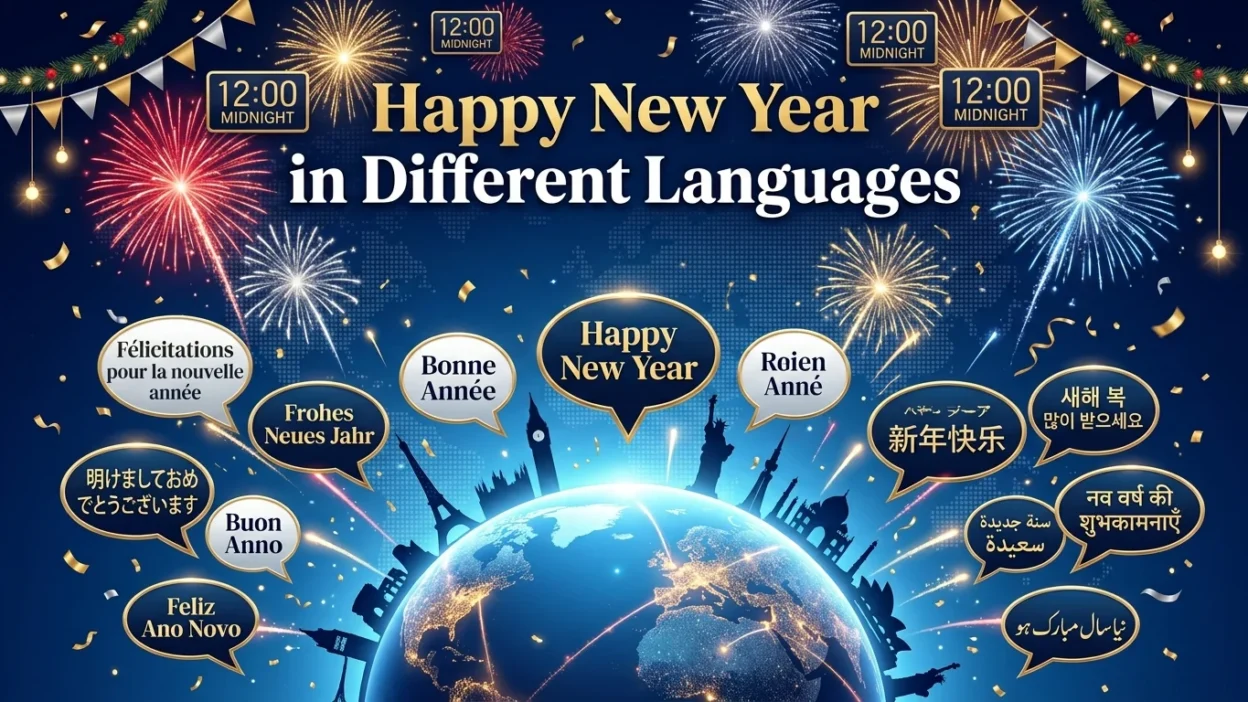
Learning happy new year in different languages is a fun and meaningful way to celebrate one of the world’s most popular holidays. Whether you’re traveling, sending greeting cards, posting on social media or wishing international friends and colleagues well, using New Year greetings in their native language makes your message more thoughtful and memorable.
In this guide, you’ll discover happy new year in different languages with native spellings and easy English pronunciations. You’ll also learn why these greetings are important, when to use them and practical tips for sharing New Year wishes with people from different cultures around the world.
Quick Answer
Happy New Year in different languages includes festive greetings used worldwide to celebrate the beginning of a new year. Learning these expressions helps you share warm wishes, appreciate different cultures, and communicate more personally with people across the globe.
Happy New Year in Different Languages Around the World
| Language | Native Word | Pronunciation |
|---|---|---|
| English | Happy New Year | Happy New Year |
| Spanish | Feliz Año Nuevo | Feh-LEES AN-yo NWAY-vo |
| French | Bonne Année | Bon Ah-NAY |
| German | Frohes Neues Jahr | FRO-hes NOY-es Yar |
| Italian | Buon Anno | Bwon AN-no |
| Portuguese | Feliz Ano Novo | Feh-LEES AH-no NO-vo |
| Dutch | Gelukkig Nieuwjaar | Guh-LUK-ig NEEV-yar |
| Swedish | Gott Nytt År | Got Nit Or |
| Norwegian | Godt Nyttår | Got Nyt Or |
| Danish | Godt Nytår | Got Nee-tor |
| Finnish | Hyvää Uutta Vuotta | HUU-vaa OO-ta VOO-ta |
| Icelandic | Gleðilegt Nýtt Ár | GLETH-i-legt Neet Aur |
| Polish | Szczęśliwego Nowego Roku | Shchen-SHEE-ve-go No-VE-go RO-ku |
| Czech | Šťastný Nový Rok | SHTAST-nee NO-vee Rok |
| Slovak | Šťastný Nový Rok | SHTAST-nee NO-vee Rok |
| Hungarian | Boldog Új Évet | BOL-dog OOJ AY-vet |
| Romanian | La Mulți Ani | La MOOLTS An |
| Greek | Καλή Χρονιά | Ka-LEE Hro-nee-AH |
| Russian | С Новым годом | S NO-vim GO-dom |
| Ukrainian | З Новим роком | Z NO-vim RO-kom |
| Bulgarian | Честита Нова Година | Ches-TEE-ta NO-va Go-DEE-na |
| Serbian | Срећна Нова година | SRECH-na NO-va GO-di-na |
| Croatian | Sretna Nova Godina | SRET-na NO-va GO-di-na |
| Turkish | Mutlu Yıllar | MOOT-loo YIL-lar |
| Arabic | سنة جديدة سعيدة | Sana Jadida Saeeda |
| Hebrew | שנה טובה | Sha-na To-va |
| Persian | سال نو مبارک | Sal-e No Mobarak |
| Hindi | नव वर्ष की शुभकामनाएँ | Nav Varsh Ki Shubhkamnayein |
| Urdu | نیا سال مبارک ہو | Naya Saal Mubarak Ho |
| Punjabi | ਨਵਾਂ ਸਾਲ ਮੁਬਾਰਕ | Nava Saal Mubarak |
| Bengali | শুভ নববর্ষ | Shubho Noboborsho |
| Gujarati | નવું વર્ષ મુબારક | Navu Varsh Mubarak |
| Marathi | नवीन वर्षाच्या शुभेच्छा | Naveen Varshachya Shubhechha |
| Tamil | புத்தாண்டு நல்வாழ்த்துக்கள் | Puthandu Nalvaazhthukkal |
| Telugu | నూతన సంవత్సర శుభాకాంక్షలు | Noothana Samvatsara Shubhakankshalu |
| Kannada | ಹೊಸ ವರ್ಷದ ಶುಭಾಶಯಗಳು | Hosa Varshada Shubhashayagalu |
| Malayalam | പുതുവത്സരാശംസകൾ | Puthu Valsara Ashamsakal |
| Nepali | नयाँ वर्षको शुभकामना | Naya Barshako Shubhakamana |
| Sinhala | සුභ අලුත් අවුරුද්දක් | Suba Aluth Avuruddak |
| Thai | สวัสดีปีใหม่ | Sa-wat-dee Pee Mai |
| Vietnamese | Chúc Mừng Năm Mới | Chook Mung Nam Moi |
| Indonesian | Selamat Tahun Baru | Se-la-mat Ta-hun Ba-ru |
| Malay | Selamat Tahun Baru | Se-la-mat Ta-hun Ba-ru |
| Filipino | Manigong Bagong Taon | Ma-ni-gong Ba-gong Ta-on |
| Chinese (Mandarin) | 新年快乐 | Xin Nian Kuai Le |
| Japanese | 明けましておめでとうございます | A-ke-ma-shi-te O-me-de-to Go-zai-mas |
| Korean | 새해 복 많이 받으세요 | Se-hae Bok Ma-ni Ba-deu-se-yo |
| Swahili | Heri ya Mwaka Mpya | He-ri Ya Mwa-ka M-pya |
| Hawaiian | Hauʻoli Makahiki Hou | How-o-lee Ma-ka-hee-kee Ho |
| Māori | Kia Hari te Tau Hou | Kia Ha-ri Te Tau Ho |
Why Learn “Happy New Year” in Different Languages?
Learning happy new year in different languages is a wonderful way to celebrate cultural diversity while making your greetings more meaningful. A simple New Year wish in someone’s native language can strengthen friendships, improve business relationships, and show genuine respect for different traditions.
These greetings are useful for travelers, students, businesses, and anyone communicating with international audiences. Whether you’re writing holiday cards, sending emails, posting on social media, or celebrating with friends abroad, using the local expression creates a warmer and more memorable experience.
Common Uses of “Happy New Year”
People exchange New Year greetings during family gatherings, office celebrations, community events, and international festivals. These wishes are commonly shared through greeting cards, text messages, social media posts, emails, video calls, and face-to-face conversations.
Many businesses also use multilingual New Year greetings to connect with global customers and partners. Sharing festive wishes in different languages helps build stronger relationships and demonstrates appreciation for cultural diversity.
Pronunciation Tips for Beginners
Learning to pronounce happy new year in different languages becomes easier with regular practice. Start by listening to native speakers and repeat each greeting slowly until you feel comfortable. Focus on the rhythm, pronunciation, and natural flow of the words instead of trying to memorize every translation at once. Speaking the phrases aloud improves both confidence and pronunciation.
Another effective method is to group languages by region. For example, Romance languages such as Spanish, French, Italian, and Portuguese share similar pronunciation patterns. You can also use flashcards, language-learning apps, or short daily practice sessions to reinforce your memory. Consistent repetition will help you remember these festive greetings naturally.
Interesting Facts About New Year Greetings
New Year is celebrated in almost every country, but the greetings and traditions vary widely. While many languages have a direct translation of “Happy New Year,” others use expressions that wish prosperity, happiness, health, or good fortune for the coming year. These greetings often reflect each culture’s values and traditions.
In countries such as Japan, Korea, and China, New Year greetings are closely connected to family gatherings and cultural customs. Meanwhile, in many Western countries, people exchange greetings during midnight celebrations, fireworks displays, and countdown events. Learning these phrases offers a fascinating glimpse into how different cultures welcome a fresh beginning.
Conclusion
Learning happy new year in different languages is a fun and meaningful way to celebrate one of the world’s most important holidays. Whether you’re sending greetings to friends, family, colleagues or international clients, using their native language makes your message more personal and memorable. These festive expressions help you build stronger relationships, appreciate cultural diversity and spread goodwill across borders. Practice a few of these greetings and you’ll be ready to wish people around the world a joyful and prosperous New Year.
Frequently Asked Questions
1. Why should I learn happy new year in different languages?
Learning New Year greetings allows you to celebrate with people from different cultures in a respectful and meaningful way. These phrases are useful for travel, business, social media, greeting cards, and international friendships.
2. Which languages have the most popular Happy New Year greetings?
Some of the most widely recognized greetings include Feliz Año Nuevo (Spanish), Bonne Année (French), Frohes Neues Jahr (German), Buon Anno (Italian), and 新年快乐 (Chinese). These greetings are used by millions of people every year.
3. Can I use these greetings on social media?
Absolutely. Multilingual New Year greetings are perfect for social media posts, greeting cards, emails, text messages, and business communications. They help your message stand out while showing appreciation for different cultures.
4. Are New Year greetings the same in every country?
No. While many countries use a phrase meaning “Happy New Year,” others include wishes for peace, happiness, prosperity, health, or success. The wording often reflects local customs and cultural traditions.
5. What is the easiest way to remember Happy New Year greetings?
Practice a few greetings every day, group similar languages together, and repeat the phrases aloud. Flashcards, language apps, and listening to native speakers are excellent ways to improve your pronunciation and memory.